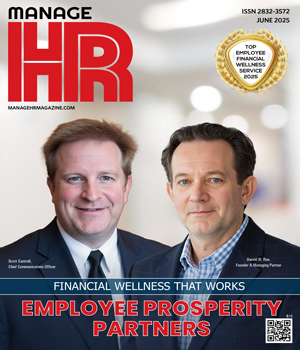
Employee Prosperity Partners: Financial Wellness that Works

Prevailing Wage Compliance Service of the Year 2025

The HR industry is experiencing a dynamic transformation driven by the pressures of increasing regulatory complexity and rising employee expectations. As organizations strive to remain compliant, competitive and attractive to potential talent, the industry has turned to innovative technology and smarter solutions to deliver more responsive and efficient systems.

In this edition of Manage HR, we explore the recent developments in the space and how companies harness cutting-edge technologies to stay ahead.

One of the most critical areas of focus has been the challenge of prevailing wage compliance. Employers engaged in public works or union projects must navigate a complex web of federal and state laws that govern wage rates, fringe benefits and detailed reporting standards.

Historically, managing these obligations has been resource-intensive, time-consuming and prone to costly errors. Advanced compliance technology is changing this narrative. By automating calculations, integrating seamlessly with existing payroll systems and deploying intelligent workflows, businesses can now meet their compliance obligations with greater accuracy and efficiency.

Simultaneously, organizations are rethinking and redefining how they support their employees beyond traditional methods of compensation and benefits. Financial stress continues to be a significant concern among workers, adversely affecting productivity, morale and overall employee retention rates.

In response to this pressing issue, many companies are turning to comprehensive financial wellness programs as an essential component of their HR strategy. These programs are designed with the goal of promoting long-term financial well-being among employees. They offer a suite of services that include access to budgeting tools, personalized financial education, debt management resources, and tailored counseling—all created to help individuals gain greater control over their financial futures.

Random drug and alcohol testing has become necessary to maintain the highest standards of professionalism in the workplace. However, most employers require employees to travel to far-off designated clinics or testing facilities to complete the test. Organizations can now streamline the process by using electronic tools to schedule the test, establish a clear and consistent drug testing policy and offer on-site testing or fast-track services.

The convergence of compliance automation and employee-centric solutions marks a significant leap forward for the HR industry as a whole. As regulatory demands continue to grow more complex and the workforce becomes increasingly value-driven, companies must adopt systems that are not only operationally sound but also genuinely people-focused.

We hope this edition of Manage HR helps you find the right partner for your business requirements.


    Prevailing Wage Compliance Service of the Year

    HCM TradeSeal provides comprehensive prevailing wage compliance solutions tailored for government contractors. Its platform streamlines certified payroll, workforce management, and reporting to ensure full compliance with federal, state, and local regulations. Trusted by contractors nationwide, the company simplifies complex labor compliance challenges with expert support and cutting-edge technology. ... read full profile

HR Compliance Info

Q1
What Do Top HR Compliance Companies Help Organizations Manage?
Top HR Compliance Companies help organizations manage the growing range of workforce regulations tied to hiring, payroll, documentation, workplace conduct and reporting obligations. Their work can include labor law compliance support, audit preparation, employee record management, workforce documentation tracking and policy oversight across multiple jurisdictions. Some providers also assist with immigration compliance, certified payroll requirements and workplace training programs tied to conduct or safety standards. For larger employers, especially those operating across several states, keeping policies aligned internally has become increasingly difficult without dedicated compliance support. The category itself has expanded well beyond manual oversight. Many HR compliance providers now combine advisory expertise with software-driven compliance management systems that automate reporting, track deadlines and centralize documentation workflows. As workforce structures become more distributed, organizations are leaning more heavily on HR compliance solutions that reduce administrative gaps before they become operational or legal problems.
Q2
Why Are Top HR Compliance Companies Becoming More Important for Employers?
Top HR Compliance Companies have gained importance because workforce regulations no longer change slowly or predictably. Remote work models, state-level labor requirements and shifting employee expectations have made compliance management far more complicated than it used to be. HR teams are now expected to manage workplace conduct standards, employee classification rules, wage transparency requirements and recordkeeping obligations at the same time. In multi-location organizations, those responsibilities often vary between jurisdictions, which adds another layer of complexity. The consequences of compliance failures have changed too. Penalties remain a concern, but reputational damage and employee trust issues can create longer-term operational problems if organizations respond poorly. That shift is one reason conversations across the Manage HR Magazine landscape increasingly position workforce compliance as a broader business responsibility rather than a purely administrative HR task.
Q3
How Should Enterprises Evaluate HR Compliance Providers?
Organizations evaluating HR compliance providers should look beyond software features alone. Regulatory expertise, responsiveness and implementation support usually have a bigger impact once compliance demands become more complex. Some vendors focus heavily on automation but provide limited guidance when interpretation or rapid decision-making is required. Others offer stronger advisory support but less operational flexibility. The balance between technology and expertise tends to matter more over time than feature volume by itself. Enterprises managing multi-state or international operations often prioritize providers with stronger labor law compliance experience and scalable compliance management capabilities. Integration support also matters because disconnected systems can create reporting inconsistencies and documentation gaps fairly quickly. Many buyers also examine how providers handle policy updates, employee training workflows and ongoing regulatory monitoring before making long-term commitments.
Q4
What Business Value Do Top HR Compliance Companies Deliver?
Top HR Compliance Companies help organizations reduce exposure tied to documentation errors, workplace disputes and inconsistent workforce practices. Their value often becomes visible through stronger reporting accuracy, more consistent internal processes and improved audit preparedness. For HR teams already stretched across multiple operational priorities, automated workforce compliance workflows can reduce manual tracking and administrative duplication significantly. In industries involving contract labor, government oversight or distributed operations, even small compliance gaps can create larger financial or reputational consequences later. That is one reason many organizations now view HR compliance solutions as part of operational stability rather than only legal protection. Some providers also improve communication consistency between HR teams, managers and employees by standardizing documentation and policy administration across locations.
Q5
How Are Technology and Automation Shaping the HR Compliance Market?
Technology has become much more central to the HR compliance market over the last few years. Organizations want faster reporting, centralized documentation visibility and fewer manual compliance processes slowing internal operations. Many providers now combine workforce compliance expertise with automation tools that manage payroll documentation, employee certifications, labor law postings and verification workflows in real time. AI-assisted monitoring systems are also being used to track regulatory changes and support audit readiness more efficiently. Even so, most employers still want access to human guidance when investigations, audits or policy changes become sensitive or time-critical. Automation improves consistency. It does not eliminate the need for interpretation. That balance is shaping expectations around Top HR Compliance Companies, especially among enterprises managing hybrid teams, government contracts or cross-border workforce structures.
Q6
What Should Decision-Makers Prioritize When Comparing Top HR Compliance Companies?
Decision-makers comparing Top HR Compliance Companies should focus on regulatory depth, reliability and long-term adaptability rather than feature count alone. A provider may offer extensive automation tools, but responsiveness and clarity tend to matter far more once compliance issues become urgent. Delayed guidance during audits or policy disputes can create operational disruption quickly. Organizations should also evaluate how well providers support changing workforce models and expansion plans over time. Workforce compliance requirements rarely stay static, particularly for businesses operating across multiple jurisdictions. The strongest HR compliance providers usually combine scalable systems with practical expertise and consistent implementation support. That combination tends to hold up better as labor regulations evolve and workforce structures become more complex.
Take Me Top